
Newsletter Subscribe
Enter your email address below and subscribe to our newsletter

 ByJohn A
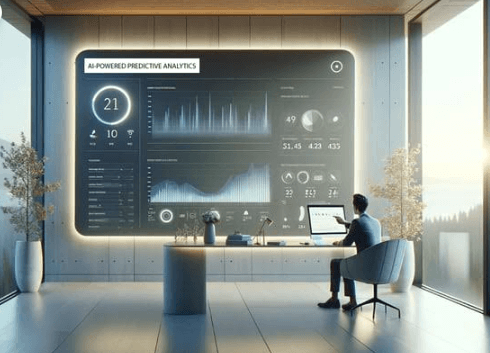
AI-based demand forecasting helps hotels integrate diverse signals—historical occupancy, seasonality, events, and competitor pricing—into transparent forecasts. It analyzes price sensitivity and occupancy elasticity, triangulates data across channels, and produces reproducible metrics for governance. Forecasts translate into staffing, inventory allocation, and dynamic rate actions. An action table links signals to responses, enabling measurable improvements in service levels, mix, and revenue, while supporting accountability and iterative refinement. This framework invites closer scrutiny of its assumptions and outcomes.
What AI-powered demand forecasting is really about is translating diverse, noisy signals into actionable occupancy and revenue projections. The approach systematically aggregates historical patterns, seasonality, and external factors, producing transparent metrics for decision makers. This framework emphasizes insight integration and data governance, ensuring reproducible analyses. Analysts prioritize validation, outlier handling, and performance tracking to support disciplined, autonomous strategic planning.
Turning data into action hinges on identifying the最 impactful inputs that drive hotel revenue. The analysis isolates pricing sensitivity, occupancy elasticity, and demand signals, then benchmarks against competitors to reveal gaps.
Data triangulation links rate tiers, seasonality, and channel mix, enabling precise levers for yield management. Transparent, repeatable processes ensure decisions align with strategic goals and profitability targets.
Forecasts generated by AI translate into concrete frontline actions by translating predictive signals into operational playbooks. The section analyzes how demand seasonality and pricing elasticity inform staffing, inventory allocation, and rate-tier decisions. A concise table below supports interpretation, linking signals to responses.
| Signal | Action | Impact |
|---|---|---|
| Demand seasonality | Adjust staffing | Optimizes service levels |
| Pricing elasticity | Tweak rates | Maximizes revenue |
| Occupancy trends | Allocate rooms | Maintains mixability |
Measuring success and surfacing actionable next steps with AI demand models requires a disciplined assessment of model performance, reliability, and impact on operational outcomes. Clear metrics track accuracy, timeliness, and revenue effects, while governance ensures accountability. Insights governance and model explainability enable transparent decision processes, enabling hotels to adjust strategies confidently, allocate resources efficiently, and pursue iterative improvements grounded in verifiable evidence.
See also: ipcainterface.
AI forecast accuracy in real-time varies; analyses indicate robust short-term performance but exposure to AI bias and data drift can degrade precision, necessitating continuous validation, recalibration, and ensemble methods to sustain reliable demand predictions for independent decision-makers seeking freedom.
One interesting statistic shows data sources can skew predictive accuracy by 25%. The analysis notes that data sources and model inputs critically shape forecasts; without comprehensive data sources, model inputs fail to reflect demand dynamics.
Sudden market shocks are mitigated through shock adaptation, with models retraining on rapid data pivots, ensemble adjustments, and anomaly weighting. Data governance ensures traceability, auditability, and controlled feature updates, preserving robustness while preserving the freedom to explore resilient strategies.
AI-assisted adjustments cannot fully replace human revenue managers; autonomous recommendations complement expertise. AI roles support decision cadence, while human judgment handles revenue ethics, nuance, and accountability in volatile markets. Analysts note persistent gaps between data and sustainable strategy.
Common pitfalls include overfitting demand models, data quality gaps, and misaligned objectives. Deployment pitfalls stem from insufficient monitoring, feature drift, and opaque governance. The analysis is data-driven, methodical, and aims to preserve strategic autonomy for stakeholders.
In the quiet calculation of demand, futures converge on present decisions, as if the market itself leaves a breadcrumb trail through numbers. The models whisper patterns that only disciplined observers can hear: occupancy elasticity, rate sensitivity, seasonality—all mapped to measurable actions. By tracing these signals to staffing, inventory, and pricing, hotels enact a studied forecast. The result is not certainty, but a disciplined choreography where data, governance, and frontline judgment move in measured harmony toward sustainable outcomes.
